Keep volume, flow, pressure and energy as separate measurements. A plausible result in one does not prove the others are adequate.
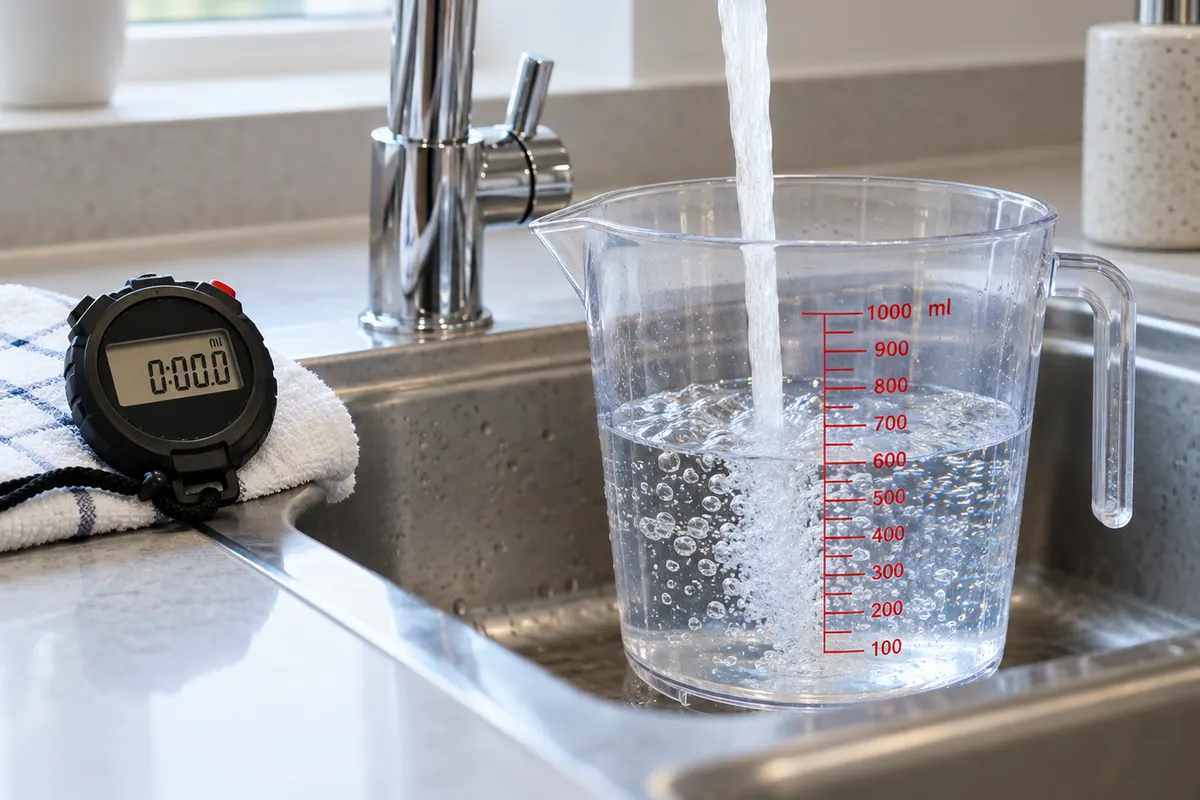
AI-generated topic illustration, not an installation diagram. Connections, dimensions and instrument readings shown are not recommendations.
1. Start with the pipe’s real internal diameter
Pipe volume controls how much water must be displaced when flushing, draining or waiting for hot water. Use the actual bore from product data: nominal size and outside diameter can be very different.
Break a mixed-diameter route into separate sections, calculate each volume, then add them. Include equipment and vessel volume separately when it matters.
2. Use net flow for tank filling
A tank fills only at inflow minus simultaneous demand. If outflow equals or exceeds inflow, the level cannot rise under the stated conditions.
Check the estimate against an observed level change. A longer real time can reveal falling well yield, pump cycling, restricted filters, leakage or an inaccurate level-volume assumption.
3. Size pressure storage from usable drawdown
The nameplate volume of a bladder tank is not the amount of water delivered between switch settings. Begin with the drawdown needed for acceptable pump run time, then estimate nominal volume.
Select the next suitable manufactured size and verify its published drawdown table. Measure precharge only with power isolated and the water side fully depressurized.
4. Combine electrical input with measured run time
Energy is electrical input power multiplied by operating hours. Hydraulic motor rating, maximum label power and whole-system electrical input are not interchangeable.
Use controller hours, a submeter or timed observations over a representative period. A change in kWh per unit of water can help expose pressure, leakage or pump-performance problems.
The four numbers and the evidence behind them
| Check | Inputs to measure | Useful decision |
|---|---|---|
| Pipe volume | Inside diameter and length | Flush, drain or hot-water delay |
| Tank fill time | Starting level and net flow | Control timing and source adequacy |
| Pressure-tank size | Drawdown and three pressures | Tank selection and cycling screen |
| Pump energy | Input kW and operating hours | Consumption, cost and trend |
Worked example
Document one simple commissioning snapshot
A 30 m pipe has a 25 mm bore. A 1,000 L tank starts at 200 L, receives 20 L/min and supplies 5 L/min. The 1.1 kW pump runs two hours per day.
Pipe water = 14.7 L
Net tank flow = 20 − 5 = 15 L/min
Fill time = 800 / 15 = 53.3 min
Pump energy over 30 days = 1.1 × 2 × 30 = 66 kWh
Keep these inputs and observed results with the system record. Repeating the same checks after service makes change visible.
What to have ready
- Pipe product data or measured internal diameter
- Tank working levels and a volume scale
- Measured inflow and simultaneous demand
- Pressure switch settings and tank data
- Pump electrical input and operating-hour record
Common mistakes
- Using outside diameter as the pipe bore.
- Dividing by gross inflow while water is also being used.
- Treating nominal pressure-tank volume as usable drawdown.
- Calculating pump energy from hydraulic output power.
Tools for these measurements
Prepare the measurements with these instrument guides.
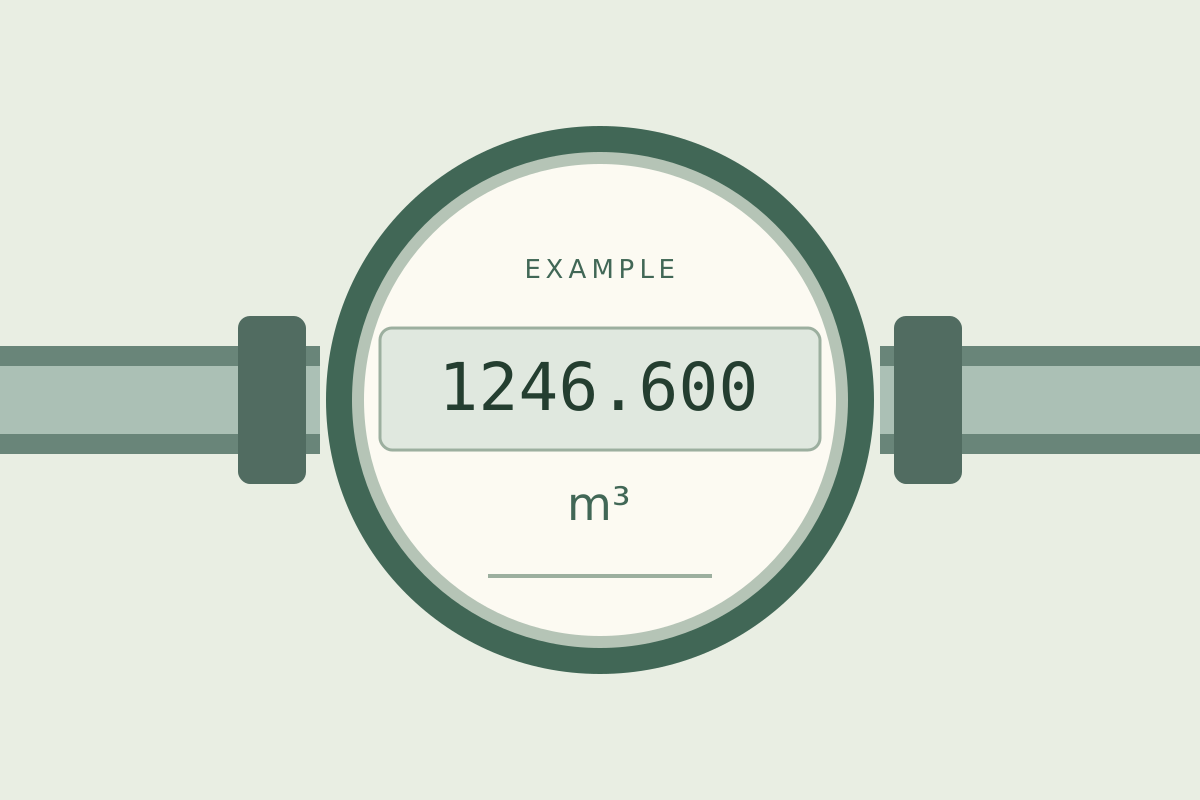
Identify the cumulative register, preserve its units and decimals, and build a usable record without mistaking a short observation for a leak diagnosis.
How to use it
Light accessible joints and dark corners while keeping your hands free; choose a useful beam, not just a large lumen number.
How to use it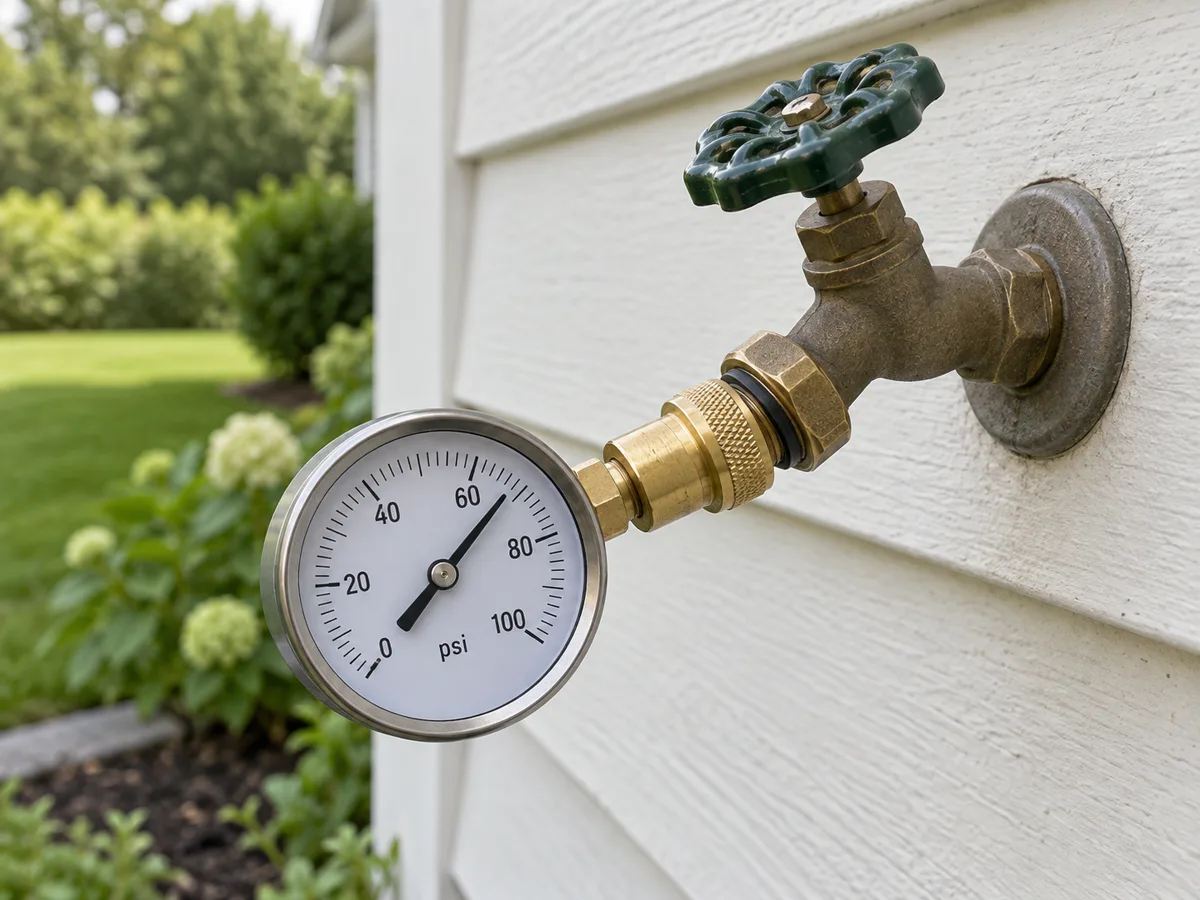
Measure static and flowing pressure at a hose connection and separate pressure problems from flow restrictions.
How to use it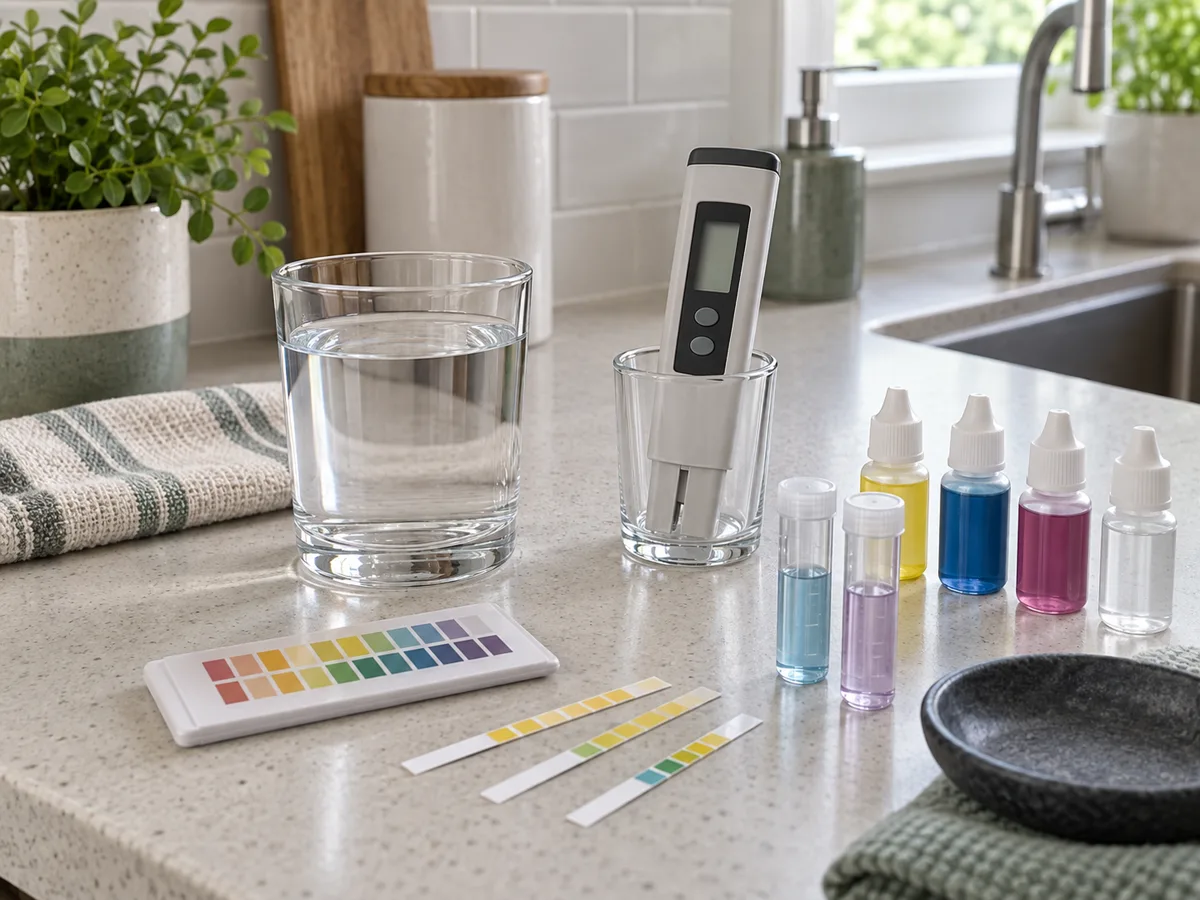
Use strips, drop tests and electronic meters for screening without confusing dissolved solids with safety.
How to use it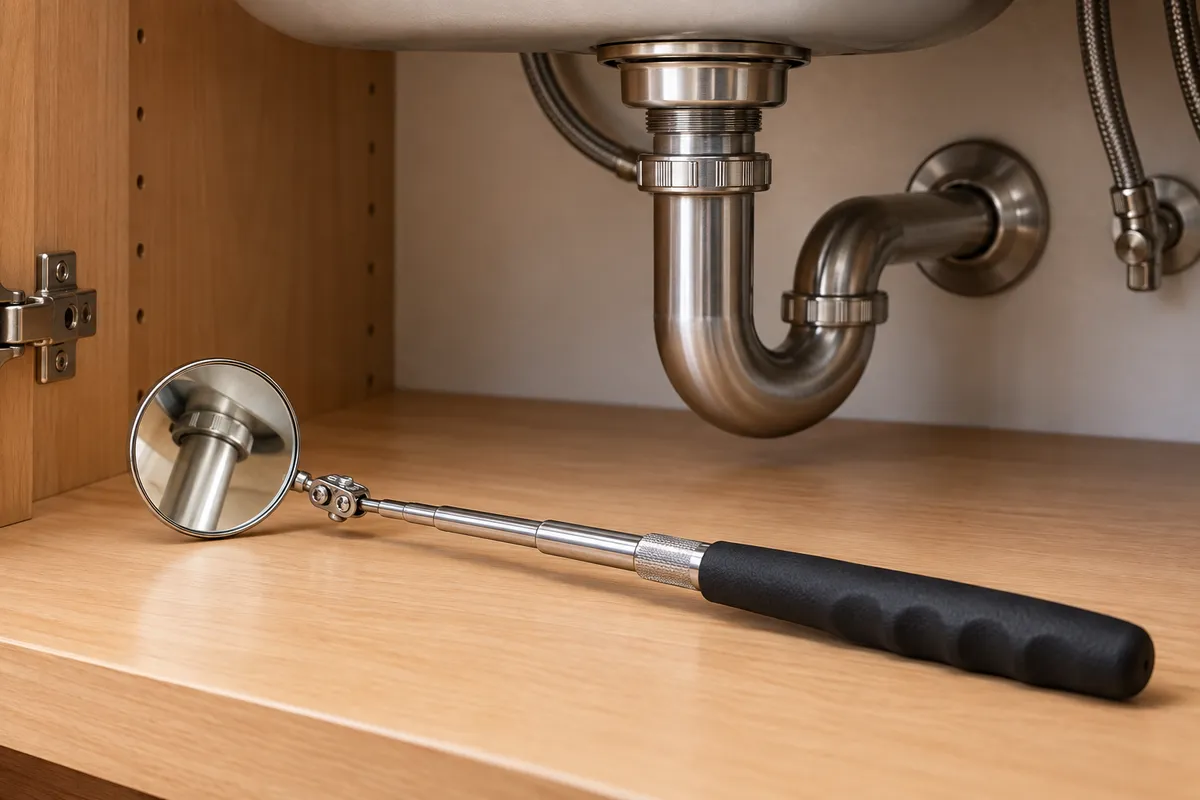
Look behind an accessible fitting without taking it apart, then confirm what the reflection actually shows.
How to use itUse and limitations. Sources include US public agencies. Principles are general; regulations and design values must be checked where you live.Worked examples use stated hypothetical inputs.