A REPEATABLE METHOD
How to use it
- Plan the viewing position and exit route. Inspect only accessible areas; do not enter a tank, pit or confined space.
- Read the model instructions, inspect the strap and housing, and check that its approved batteries are charged or fresh.
- Fit the strap comfortably and aim a moderate wide beam at the work, away from other people’s eyes.
- View joints from more than one angle. Use a mirror for an accessible hidden side rather than reaching blindly.
- Record the location and visible signs of moisture or damage. Switch off, clean as instructed and store dry after the check.
INTERPRET THE MEASUREMENT
How to read the result
- Lumen output describes light emitted, not the illuminance at a particular joint; distance and beam shape matter.
- A reflected highlight can look like moisture. Change the viewing angle and confirm with a suitable separate check.
- Advertised maximum brightness and runtime may refer to different modes. Compare the same mode and test useful runtime before relying on it.
TROUBLESHOOT THE METHOD
Common problems and what to check
Glare hides the detail
Reduce brightness, change angle or use diffuse room lighting as well.
The light fades or switches off
End the check safely and inspect the approved battery supply according to the manual; keep a separate backup light.
The lamp slips forward
Adjust the strap and tilt; stop if the housing or buckle is damaged.
STOP BEFORE THE HAZARD
Safety boundary
- Do not stare into the LED or direct it into anyone’s eyes; do not use it to judge whether rotating machinery has stopped.
- An ordinary headlamp is not proof of suitability for an explosive atmosphere, immersion or live electrical work. Do not enter hazardous spaces or open energized enclosures.
- Use only the specified batteries and charging method. Do not recharge disposable cells or use a swollen, leaking or damaged battery.
- Do not climb or lean into an unsafe opening just because it is now illuminated.
SMART BUYING GUIDE
What to look for when choosing
- Prefer a comfortable strap, usable wide beam and accessible controls at the working distance.
- Check the exact model’s water-resistance rating, battery options and runtime conditions; keep a backup light for important checks.
Types of tool
Best for: Occasional inspections with suitable spare cells available.
Best for: Frequent checks when its approved charging arrangement is practical.
Common functions
Worth paying more for
- A stable comfortable fit, wide low-glare mode and predictable useful runtime.
Usually not worth the extra cost
- Extreme brightness that causes glare in a small cupboard, or modes you will not use.
Sources & instructions
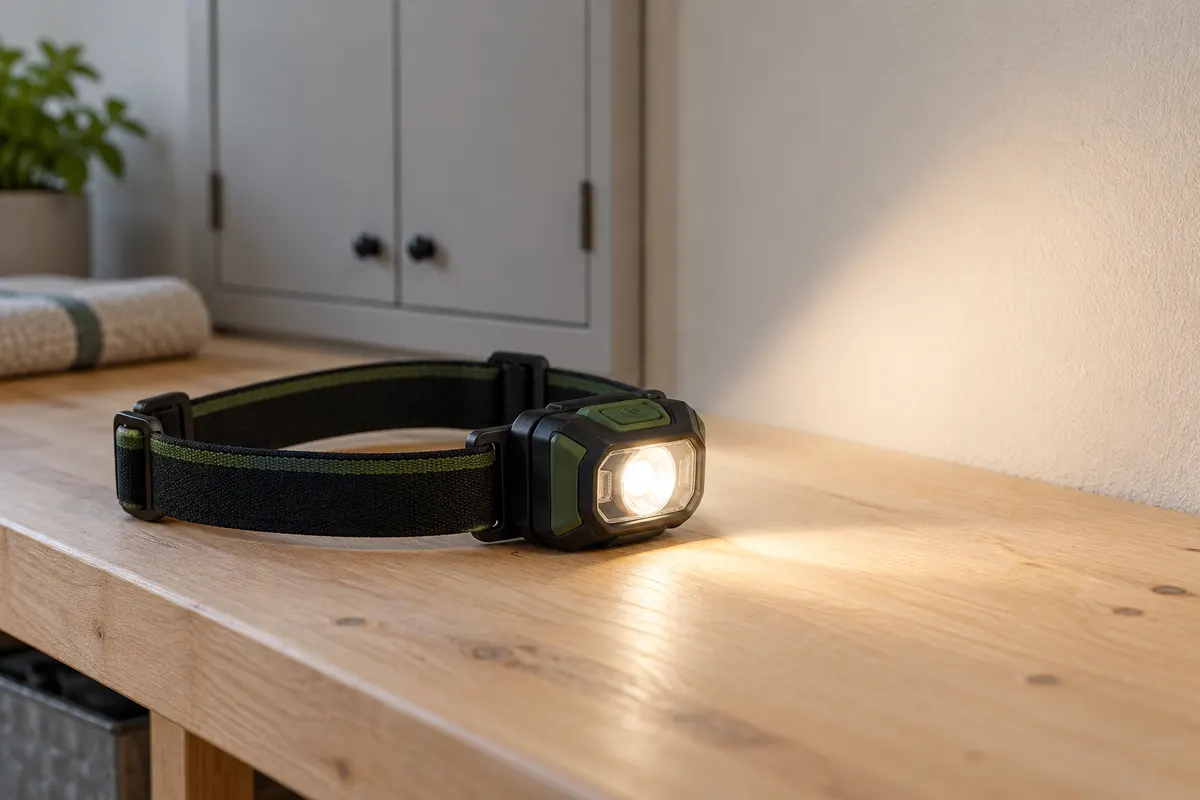
AI-generated topic illustration; do not use the depicted scale for measurements.
Put the measurements to work
Turn pipe dimensions, tank levels, pressure settings and pump run time into four useful commissioning numbers.
Find and quantify a hidden household water leakUse the water meter, simple isolation tests and a timed measurement to turn unexplained consumption into a repairable fault.