A REPEATABLE METHOD
How to use it
- Wipe the measuring face and supporting surface; check that the body is straight.
- Use the correct vial and designated measuring face, with stable contact.
- Read the bubble square-on after it settles.
- For a horizontal check, mark its position, turn the level end-for-end and return the same face to the same line. Compare the bubble position relative to the surface.
- If the check disagrees, consult the maker or replace the tool; do not adjust a sealed vial by guesswork.
INTERPRET THE MEASUREMENT
How to read the result
- A central bubble indicates level within the instrument tolerance, not perfect mathematical alignment.
- A short level can miss a wider bow. Check several positions or use a suitable straightedge.
- For a required fall, use rise over horizontal run; do not estimate a numeric slope from an uncalibrated bubble offset.
TROUBLESHOOT THE METHOD
Common problems and what to check
The bubble changes after reversal.
Repeat on a clean stable surface and check for body damage. Follow the manufacturer’s verification procedure.
A shelf seems level but rocks.
Look for local high spots, debris or a bowed surface; check contact rather than pressing the level flat.
STOP BEFORE THE HAZARD
Safety boundary
- Do not stand on unstable furniture to reach a high surface.
- A level is not a hammer or lever; impacts can damage its body and vials.
SMART BUYING GUIDE
What to look for when choosing
- Select length for the surface and check specified accuracy in the orientation you use.
- Choose readable protected vials and a straight durable body.
Types of tool
Best for: General household alignment.
Best for: Confined spaces and short fittings.
Best for: Repeated numeric angle or slope measurements when calibrated.
Common functions
Worth paying more for
- A rigid straight body and readable protected vials
- Accuracy specified for intended orientations
Usually not worth the extra cost
- Magnets without steel work
- A digital display for occasional shelf alignment
Manufacturer references
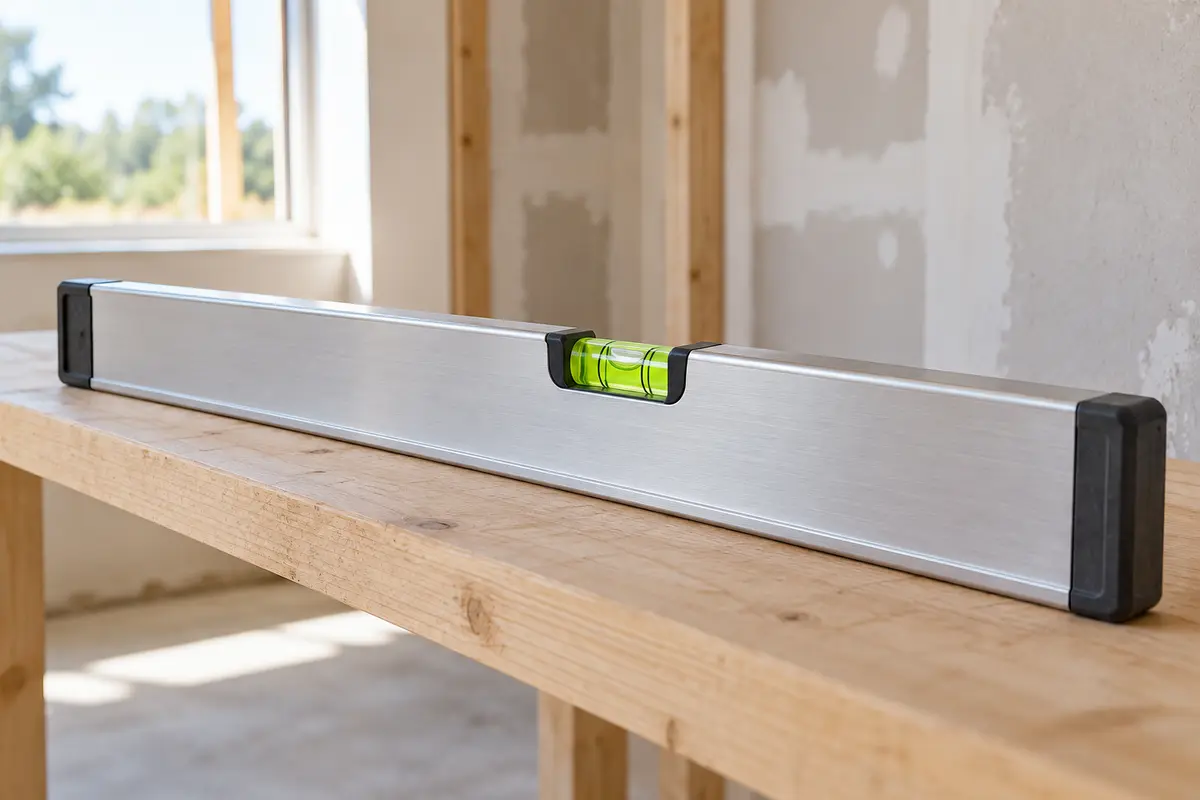
AI-generated topic illustration; do not use the depicted scale for measurements.
Put the measurements to work
Turn a required grade into invert levels while protecting cover, access and the downstream system.
Estimate a concrete order without hiding the assumptionsSeparate drawing dimensions, geometric volume, allowance and supplier constraints.
Size the roof-drainage path from rainfall to safe dischargeConnect roof area and design intensity to gutters, outlets, downpipes and foundation drainage.