A REPEATABLE METHOD
How to use it
- Confirm the fluid product and whether the instrument supports its glycol type and units.
- Have a competent person collect a sample from a safe service point; allow it to cool.
- Clean the prism and perform the instrument's specified zero or reference check.
- Apply a clean sample without bubbles, close the cover and read the correct scale after stabilization.
- Repeat and record product, scale, temperature and result; clean the prism as instructed.
INTERPRET THE MEASUREMENT
How to read the result
- Propylene-glycol, ethylene-glycol, Brix and percent scales are not interchangeable.
- Compare the result with the actual fluid manufacturer's data; additives and mixed fluids can invalidate a generic conversion.
- Concentration does not establish inhibitor condition, corrosion protection, burst protection or pump suitability.
TROUBLESHOOT THE METHOD
Common problems and what to check
Problem
Boundary is blurry
What to do
Check focus, prism cleanliness, full sample coverage and temperature.
Problem
Result conflicts with the fluid record
What to do
Recheck the reference and scale; ask the fluid supplier about an uncertain or mixed sample.
STOP BEFORE THE HAZARD
Safety boundary
- Do not open a hot or pressurized system to obtain a sample; use a qualified service professional.
- Treat samples as chemicals: follow the product safety data sheet, use suitable protection and keep them away from food and children.
- Never add or mix antifreeze based only on this reading; verify equipment approval and the fluid supplier's requirements.
SMART BUYING GUIDE
What to look for when choosing
- Match the scale and range to the named fluid; check whether displayed percent means mass or volume.
- Choose a readable instrument with clear reference-check and cleaning instructions.
Types of tool
Best for: A few checks where its correct scale is clearly readable.
Best for: Repeated checks with documented units and a supported fluid.
Common functions
Known-fluid concentration or an instrument-specific freezing-point estimate.
Worth paying more for
- The correct dedicated scale and a documented reference check.
Usually not worth the extra cost
- Multiple unrelated scales or unsupported claims of overall system safety.
Sources & instructions
- Fernox: refractometer, calibration and sample preparation
- ATAGO: example propylene-glycol refractometer and dedicated scales
- Fernox: product-specific antifreeze and corrosion protection
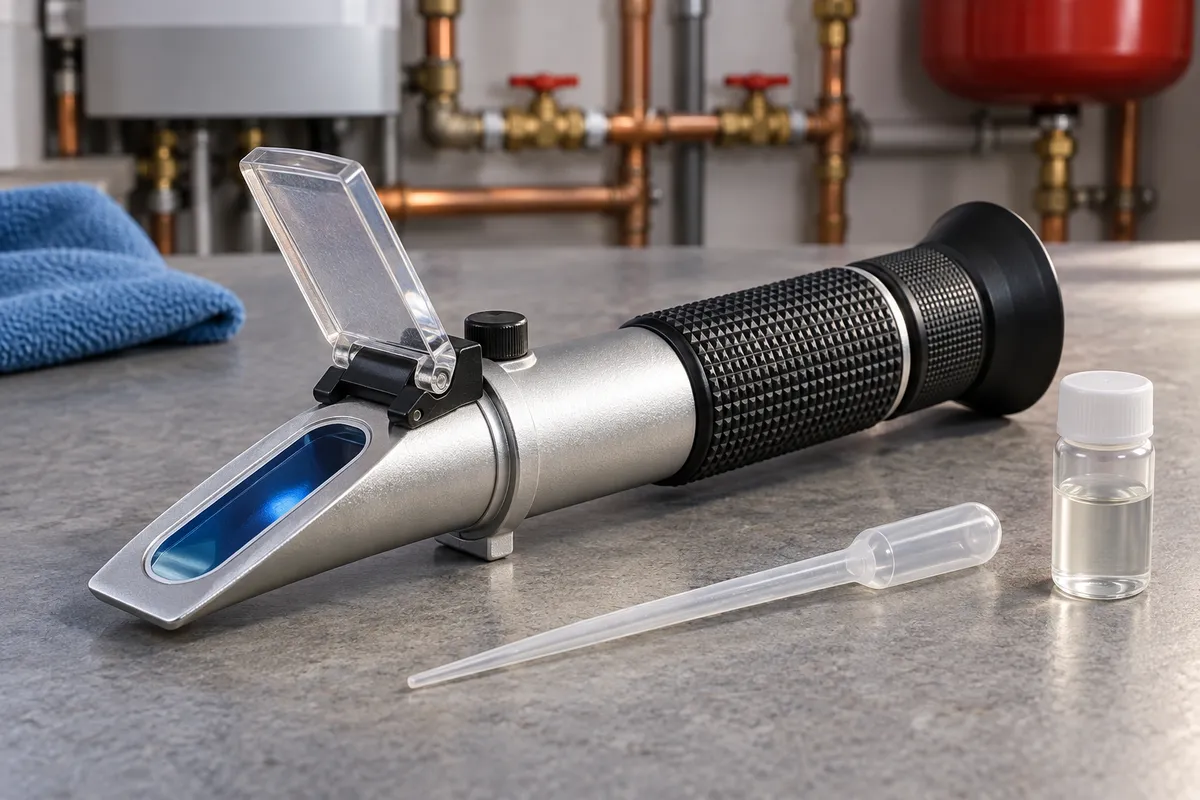
AI-generated topic illustration; do not use the depicted scale for measurements.
Put the measurements to work
Prepare the house before the first hard freeze.
Walk through exposed water systems, heating dependencies and outage actions while there is time to fix them.
Plan a low-temperature hydronic heating circuitConnect room heat loss, emitter output, water flow, pump head and commissioning without treating one number as the whole design.