Wells & water/ CALCULATOR

Water use from two meter readings

Calculate recorded water use, litres per day and litres per person from two readings of the same meter, rather than an assumed household demand.

Tools & meters
Use a cumulative reading in cubic metres. Keep the decimal scale and meter identity with the record.
Use the same meter and units. A replaced, reset or rolled-over counter needs separate records, not a negative difference.
Use actual elapsed time, not a guessed month length. For 36 hours enter 1.5 days.
For changing occupancy use total person-days divided by elapsed days. The per-person figure still includes outdoor and shared uses.
Recorded interval volume

12.600 m³

Average daily water use

900.0 L/day

Average per person per day

300.0 L/person/day

Two actual cumulative readings of one unchanged meter in m³; 1 m³ = 1000 L. Meter replacement, rollover and reverse flow are not modelled. Shared use, irrigation and leakage remain included. Average rates are not peak flow, proof of a leak, water quality or a bill. Finer display precision does not improve meter resolution.

Tools for these measurements

Prepare the measurements with these instrument guides.

FROM ESTIMATE TO ACTION

Use the result, not just the number.

01

Record one meter, one unit and two timestamps

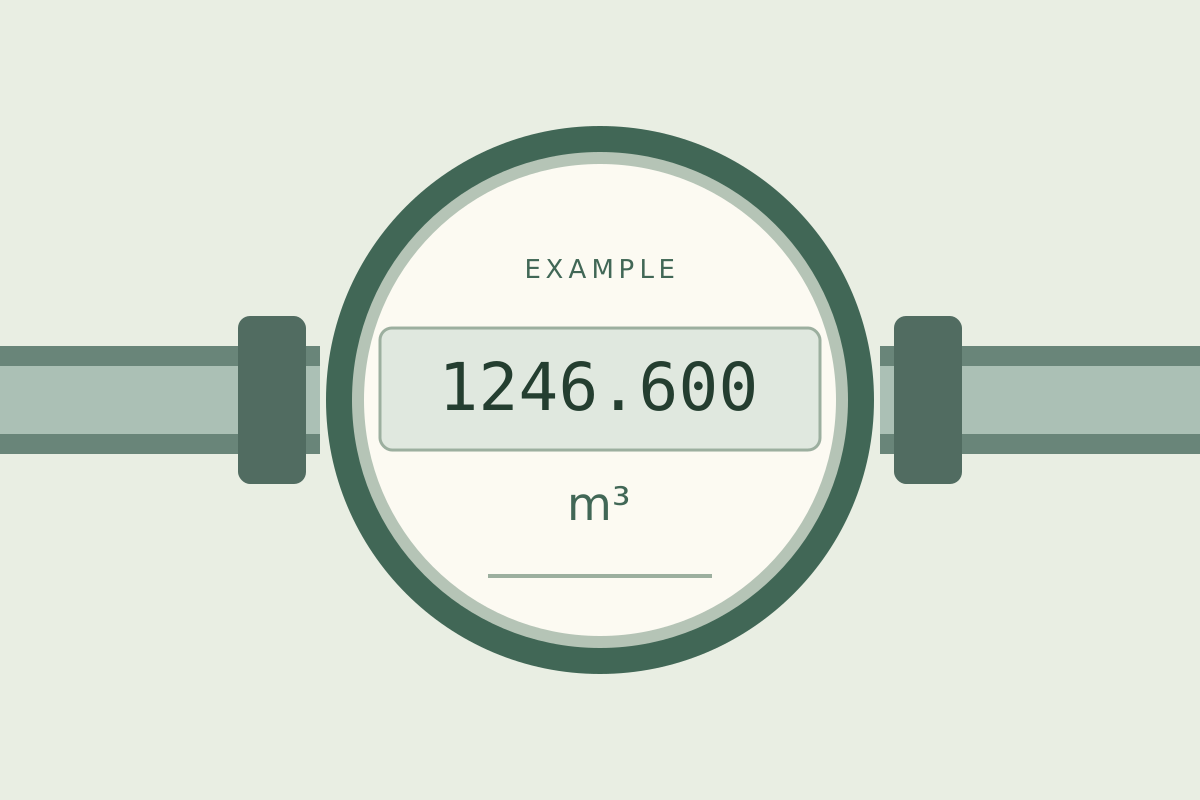
Photograph or transcribe safely accessible readings with their dates, times and meter identity. Enter m³, not litres, gallons or a dial position. For example, 1234 m³ plus 600 L is 1234.600 m³; check the actual register scale rather than assuming that digit colours are universal. If the meter was replaced or rolled over, split the interval using documented readings. Do not enter a chamber or dismantle equipment to read it.

02

Compare rates, not unequal period totals

12.600 m³ over 14 days is 900 L/day; the same volume over 28 days is 450 L/day. For a partial day, divide elapsed hours by 24. With varying occupancy, 28 person-days over 14 days means 2 average occupants. The example values are not a target. Repeat comparable intervals and note irrigation, visitors and absences before interpreting changes.

03

Separate observed use from a diagnosis

The meter total includes every downstream use it records, including shared taps, irrigation and possible losses; dividing by residents does not isolate personal indoor use. A high average alone does not locate a leak, establish peak flow or calculate a bill. For suspected leakage, use the related no-use check and document intended automatic uses. Save readings and conditions alongside the calculated result.

Inputs to verify

Initial meter reading (m³)
Use a cumulative reading in cubic metres. Keep the decimal scale and meter identity with the record.
Final meter reading (m³)
Use the same meter and units. A replaced, reset or rolled-over counter needs separate records, not a negative difference.
Elapsed time between readings (days)
Use actual elapsed time, not a guessed month length. For 36 hours enter 1.5 days.
Average occupants during the interval (people)
For changing occupancy use total person-days divided by elapsed days. The per-person figure still includes outdoor and shared uses.

Continue your calculation