A REPEATABLE METHOD
How to use it
- Identify a safely accessible risk location, such as beneath a sink or beside a washing machine. Consider where escaping water would actually travel.
- Fit the specified batteries and arrange the sensing contacts as the manual requires. Keep a separate control unit above possible water when its design requires this.
- Perform the manufacturer’s contact-sensor test; do not flood the floor or submerge the housing. Confirm the audible alarm and, where supported, the remote alert separately.
- Record the location, test date and who responds. Check the manual for battery replacement and periodic testing.
- After an alert, investigate safely, correct the cause and follow the drying/reset procedure before repeating the test.
INTERPRET THE MEASUREMENT
How to read the result
- An alarm indicates contact with water, not its source or flow rate. Condensation, cleaning water and a plumbing leak need different responses.
- A quiet sensor does not prove that the whole room or concealed pipework is dry.
- A sensor cable may detect along its length or only at a separate probe, depending on the product. Check which part is active.
TROUBLESHOOT THE METHOD
Common problems and what to check
Water bypasses the sensing point.
Reassess the water path and contact placement; add compatible sensing coverage instead of assuming one point covers everything.
The siren works but no phone alert arrives.
Check connection, account settings and phone permissions. Test the complete alert path; local and remote warnings are different functions.
The alarm persists after cleaning up.
Look for remaining moisture at the contacts and use the specified drying/reset method. Check for continuing leakage before muting the warning.
STOP BEFORE THE HAZARD
Safety boundary
- Do not enter flooded areas or touch wet electrical equipment. If electrical contact is possible, keep clear and obtain qualified help.
- A leak alarm is not a pump controller or shut-off valve. Automatic isolation needs a compatible, correctly installed system and a verified response.
- Respect the housing’s water-exposure rating; a sensor designed to touch water is not necessarily safe to submerge.
SMART BUYING GUIDE
What to look for when choosing
- Choose the sensing layout for the likely water path and test access.
- Check battery warnings, local sound, optional remote alerts and what happens if the network is unavailable.
Types of tool
Best for: A small accessible location where a person can hear the alarm.
Best for: An awkward contact location or broader coverage supported by the model.
Common functions
Worth paying more for
- A sensing arrangement that covers the actual risk
- A warning route you have tested and can act on
Usually not worth the extra cost
- Cloud features when nobody can respond remotely
- A shut-off claim without a compatible valve and installation plan
Sources & instructions
- Resideo / First Alert: example leak-detector installation guide
- First Alert: point sensors, sensing cables and notifications
- Honeywell Home: immersion limitations
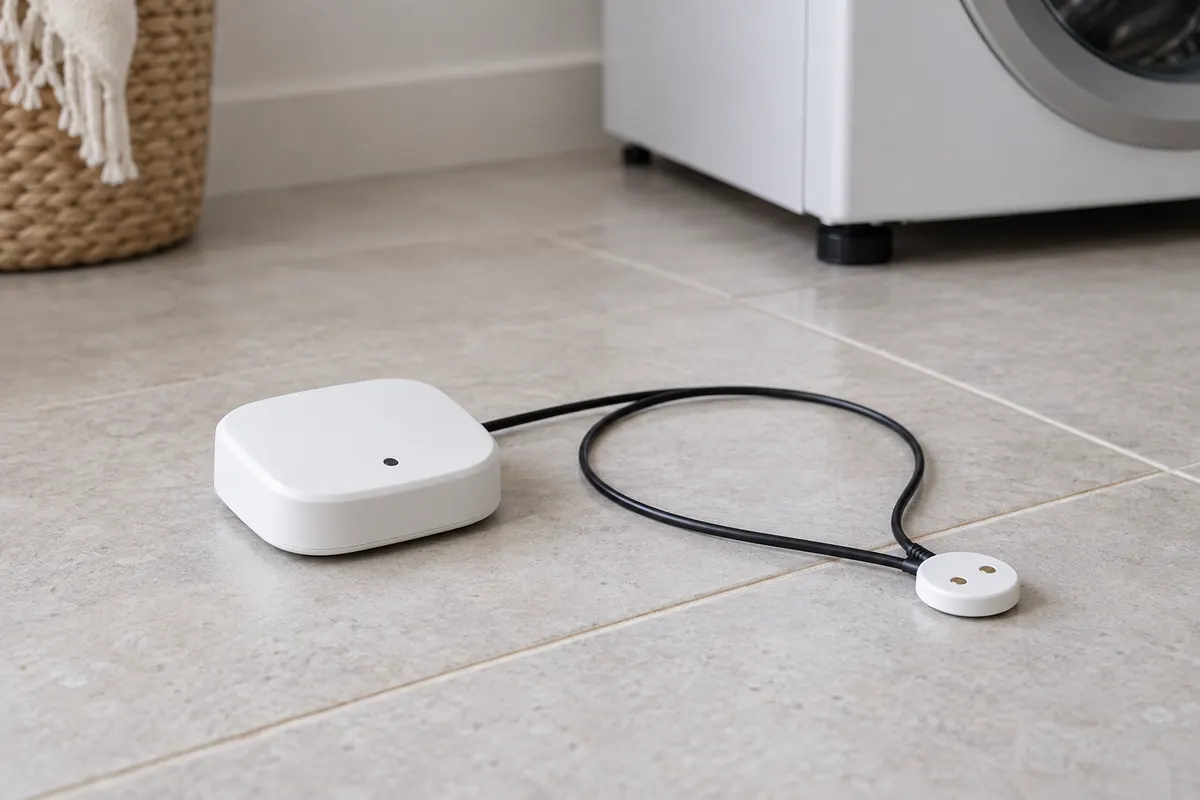
AI-generated topic illustration; do not use the depicted scale for measurements.
Put the measurements to work
Use the water meter, simple isolation tests and a timed measurement to turn unexplained consumption into a repairable fault.
Plan a sump pump system for cycling, discharge and power outagesTurn measured water levels and wet-weather inflow into a maintainable pumping and backup plan.