A REPEATABLE METHOD
How to use it
- Identify the sample and check the electrode for damage.
- Calibrate with fresh manufacturer-approved buffers that bracket the expected reading; use separate clean portions.
- Rinse between solutions, measure a clean sample and wait for the stability indication.
- Record pH, temperature and calibration date; rinse and store the electrode as instructed.
INTERPRET THE MEASUREMENT
How to read the result
- pH describes acidity; EC/TDS and hardness are different measurements.
- Temperature compensation corrects electrode response, not every temperature-dependent change in the sample.
- A small display increment is not the same as verified accuracy.
TROUBLESHOOT THE METHOD
Common problems and what to check
Problem
Reading keeps drifting
What to do
Check hydration, contamination, fresh buffers and sample temperature before trusting it.
Problem
Calibration fails
What to do
Follow the cleaning and hydration procedure; replace an electrode that cannot pass the manufacturer's check.
STOP BEFORE THE HAZARD
Safety boundary
- Do not declare water drinkable from its pH; use an accredited laboratory for a safety assessment.
- Keep buffers and storage solution away from children and food; never drink tested samples.
- Do not store a glass pH electrode in distilled water or let it dry; follow its specified storage procedure.
SMART BUYING GUIDE
What to look for when choosing
- Choose an electrode suitable for the sample and a documented calibration method.
- Check replacement-electrode availability and the ongoing cost of buffers and storage solution.
Types of tool
Best for: Occasional checks on clean water.
Best for: Repeated sampling and easier probe replacement.
Common functions
Water pH and sample-temperature observations.Calibration and stability indication when supported.
Worth paying more for
- A replaceable electrode, reliable calibration and clear stability indication.
Usually not worth the extra cost
- Extra decimal places without documented accuracy or a maintained electrode.
Sources & instructions
- Hanna Instruments: pocket pH tester and calibration
- Hanna Instruments: calibration procedure
- Hanna Instruments: electrode storage
- US EPA: certified laboratory testing of private-well water
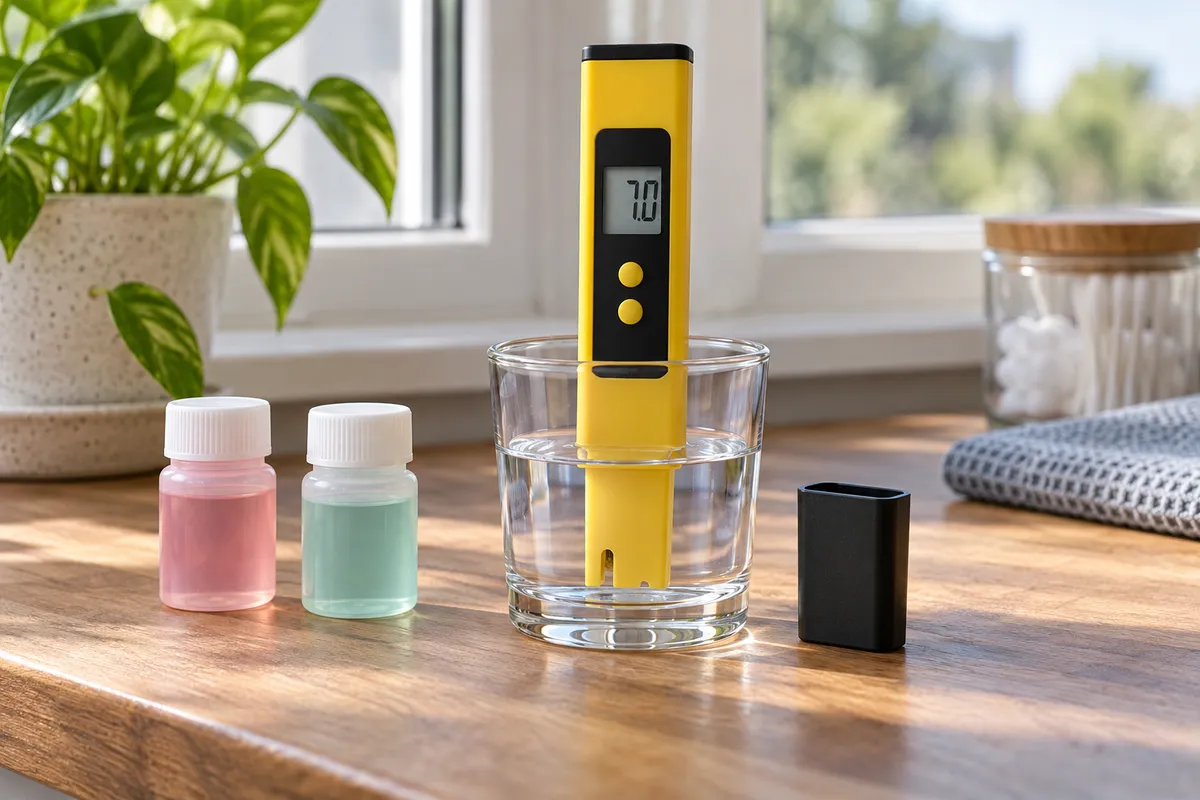
AI-generated topic illustration; do not use the depicted scale for measurements.