A REPEATABLE METHOD
How to use it
- Confirm that the tester, plug type and voltage rating match the local supply and socket system.
- Inspect the outlet and tester. Do not use either item if it is wet, cracked, scorched or loose.
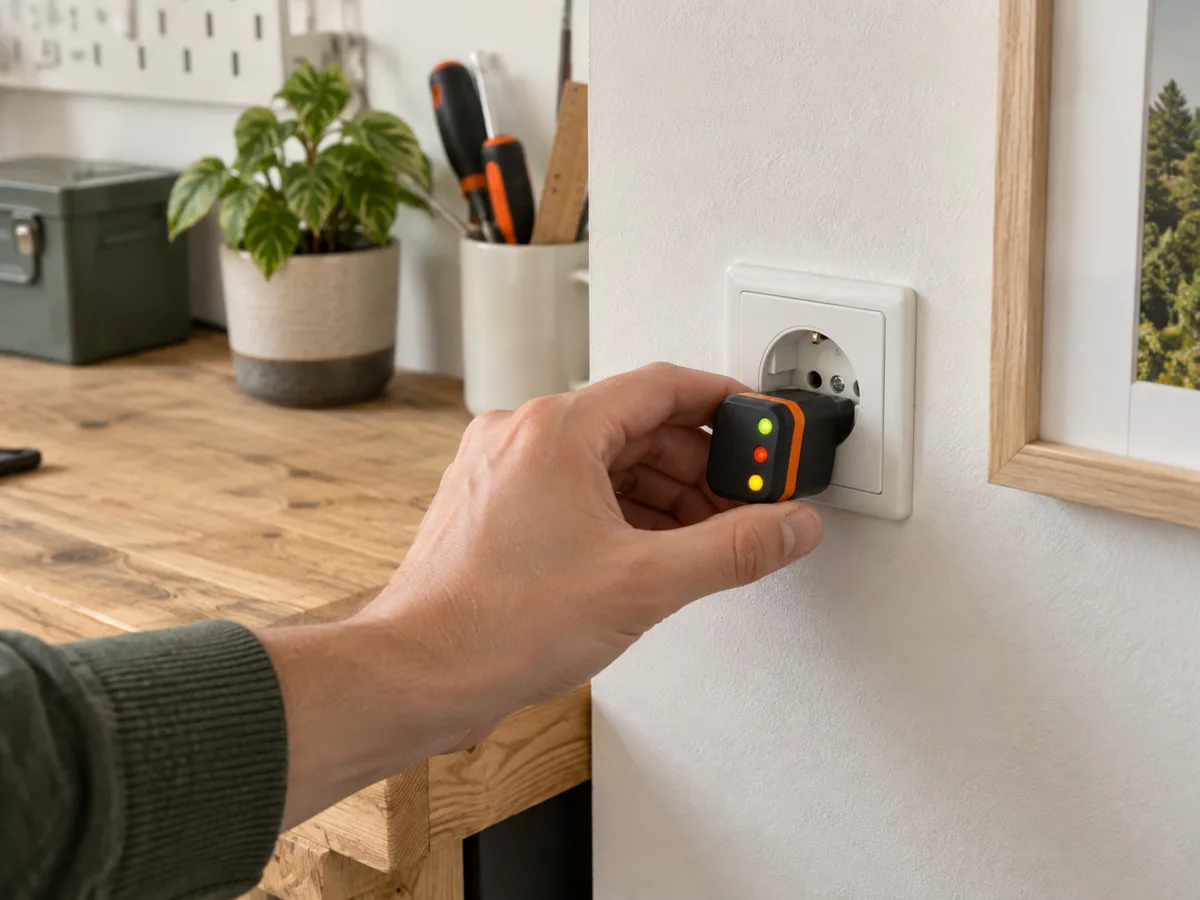
- Insert the tester fully without touching metal parts, then compare the lights with the legend supplied with that exact model.
- If fitted, use the RCD/GFCI button only after checking that disconnecting the circuit will not create a hazard or lose important data.
- Record the socket, indicated pattern and result. Have abnormal, inconsistent or unexplained readings checked by a qualified electrician.
INTERPRET THE MEASUREMENT
How to read the result
- Indicator patterns are model-specific; the same lamp combination can mean something different on another tester.
- A “correct” indication usually confirms only the limited conductor pattern the tester can sense at that moment.
- An RCD/GFCI test button is a functional screen, not a certified measurement of trip time, trip current or earth-loop performance.
TROUBLESHOOT THE METHOD
Common problems and what to check
The tester says “correct,” but the outlet still behaves badly.
Stop using the outlet if it is hot, loose, intermittent or damaged. A basic tester may miss a poor connection, voltage drop under load or certain neutral/earth faults.
The light pattern changes when the plug is moved.
Treat this as a fault. Remove the tester, isolate the outlet if safe to do so and arrange inspection; movement should not change a sound connection.
The RCD/GFCI button does not trip protection.
Do not assume the tester is wrong. Stop relying on that outlet for protection and have the circuit, device compatibility and protective equipment checked.
STOP BEFORE THE HAZARD
Safety boundary
- Use only on intact, dry, compatible outlets within the tester rating; never defeat the earth contact with an adapter.
- Do not use a plug-in tester to prove that conductors are de-energized before electrical work.
- Wiring systems and protective-device rules vary by region. Follow local requirements and use a qualified electrician for corrective work.
SMART BUYING GUIDE
What to look for when choosing
- Choose the exact plug standard, nominal voltage and RCD/GFCI test type used in your region.
- A clear printed legend, robust contact pins and an explicit limitations section are more useful than many unexplained lights.
- For certification, fault-loop testing or renovation sign-off, hire a professional with an installation tester instead of buying a premium pocket unit.
Types of tool
Best for: Fast screening of familiar outlets for a few common patterns.
Best for: A basic functional trip check on compatible protected circuits.
Best for: Qualified commissioning, loop, insulation and trip measurements.
Common functions
Worth paying more for
- The correct regional plug and protective-device compatibility
- A durable housing and clearly documented indication table
- Independent safety marking from a credible certification system
Usually not worth the extra cost
- A voltage display if a proper meter is already available
- Claims that a pocket tester certifies the entire installation
- Extra light patterns without a clear test method and limitations