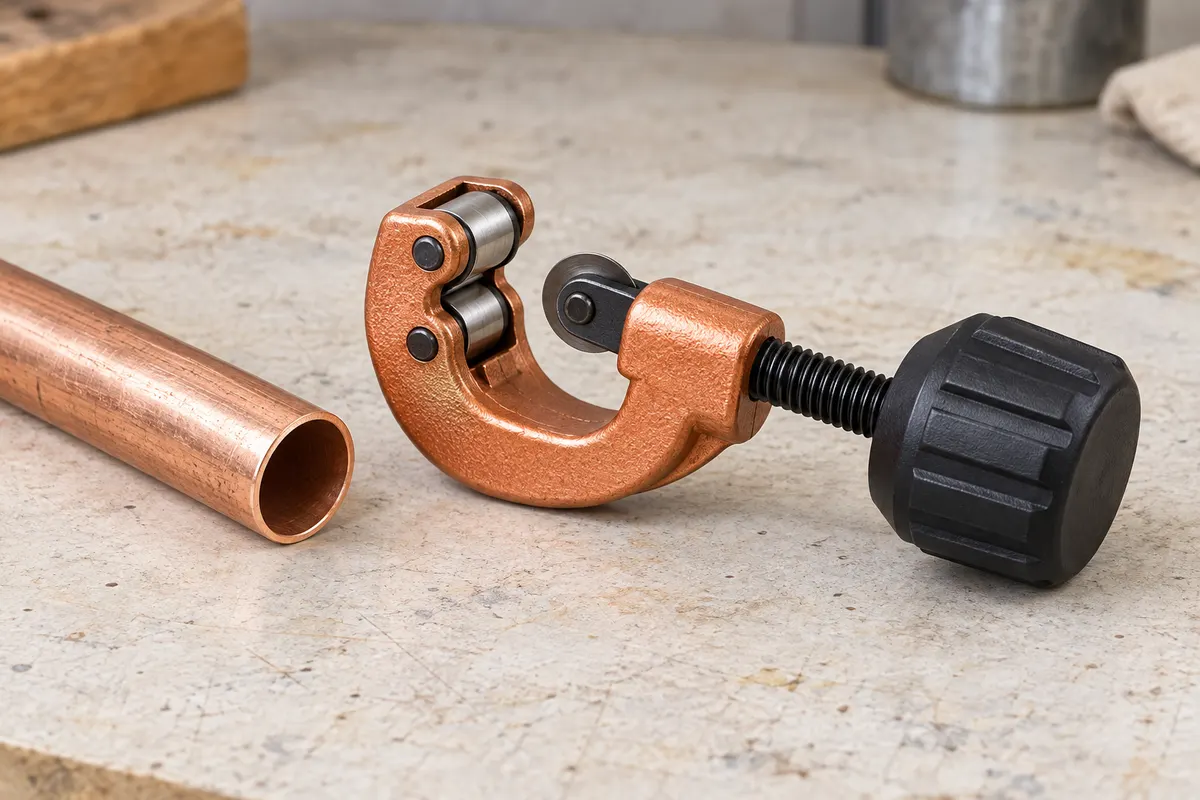
A REPEATABLE METHOD
How to use it
- Identify the tube material, outside diameter and wall thickness. Choose the specific cutter and wheel approved for them.
- Work on a loose, drained, cool piece of tube. System isolation and any gas, refrigerant or regulated installation belong to a competent specialist.
- Measure the finished length with the fitting insertion requirements accounted for separately. Mark the intended cut and support the tube.
- Seat the rollers and wheel squarely. Rotate with the manufacturer’s incremental feed; do not crush the tube by tightening fully at the start.
- Inspect the end for spiral tracking, distortion and burrs. Deburr and clean as the connection system requires; verify the final length before assembly.
INTERPRET THE MEASUREMENT
How to read the result
- Outside diameter selects cutter fit; inside diameter belongs in the water-volume calculator. They are not interchangeable.
- A spiral track indicates movement or misalignment, not an acceptable square end.
- The cut end is only one preparation step. A clean cut does not certify a leak-free connection or completed pressure test.
TROUBLESHOOT THE METHOD
Common problems and what to check
Problem
Tube end is flattened
What to do
Stop. Check wheel, material suitability and feed. Remove the damaged section only if the final length still works.
Problem
Two grooves or a spiral
What to do
Recheck squareness, support and wheel condition on a spare piece before continuing.
Problem
Cutter will not rotate in the space
What to do
Use an approved close-quarters tool or prepare loose tube at the bench. Do not remove guards or improvise system access.
STOP BEFORE THE HAZARD
Safety boundary
- Never cut an unknown, pressurized, hot or connected live service.
- Protect eyes from chips; support both resulting pieces and keep hands clear of the wheel.
- Collect metal debris. Do not leave swarf inside drinking-water piping.
SMART BUYING GUIDE
What to look for when choosing
- Match material and wall thickness, not only the largest diameter printed on the box.
- Check replacement wheel availability and the room needed for rotation.
Types of tool
Best for: Loose compatible tube with access around the full circumference.
Best for: Compatible tube where the tool’s approved operating space is restricted.
Common functions
Controlled circumferential cuts.Preparing a length for further deburring and system-specific joint preparation.
Worth paying more for
- Correct replaceable wheel and stable rollers.
- Smooth feed without play.
Usually not worth the extra cost
- Universal-material claims unsupported by the wheel specification.
- Capacity you cannot rotate around the tube.
Sources & instructions
AI-generated topic illustration; do not use the depicted scale for measurements.